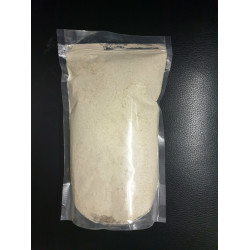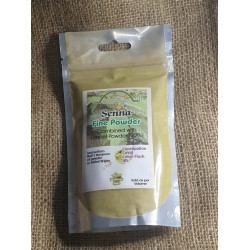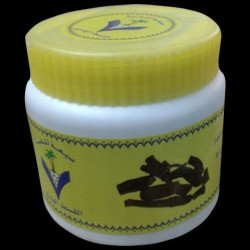










Sidr (Lote) Tree Leaf Powder 110g

Powdered leaf of the Sidr (Lote) Tree
Halaal Status:
Halaal Suitable
The Sidr tree is medium-sized deciduous with a distinct golden yellow color from the Jujube family.
Sidr tree is a sturdy and deep-rooted tree which has withstood the devastating floods of Eram at Ma’arib Yemen with two other trees: the Tamarisk and the Mustard Tree. The Sidr tree belongs to the “Ziziphus” family of plants. The average tree size is normally between 7-8 meters high. Its branches are soft and gray-yellowish. The flowers of the plant are yellow as well as the round Sidr fruits which turn reddish when ripe.
The bark on young trees is smooth and light grey but becomes rough with age. Using Phytochemical screening to the bark of the Sidr tree, a team from Albaha university and the University of Saskatchewan studied its antibacterial, antifungal activities. The team found that the bark’s ethanolic, chloroform, ethyl acetate, n-butanol, and Alkaloids extracts showed a potential resistance in facing germs attacks.
Names:
1. In Hadith & Quran it is called Sidr (السدر)
2.In English it is called as Jujube, lote tree, lotus tree.
3. Botanical name is Ziziphus spinachristi and Ziziphus jujube.
4. In Hindi it is called as Ber.
Historical references:
The Sidr tree is an ancient tree, mentioned four times in the Qur’an.
Quranic references of Sidr (السدر): –
1. Sura Saba, verse no 16.
2. Sura Waaq’ah, verse no 27 to 33.
3. Sura Najm, verse no 7 to 12.
4. Sura Najm, verse no 16-17.
Sidr the first eatable of Hazrat ADAM (عليهالسلام) on earth
Nabi صلی اللہ علیہ وسلم said that Hazrat Adam (a.s) ate this (السدر) fruit the first, on earth among other fruits. : Reference Abu Nu-aim: 805.
Our Prophet صلی اللہ علیہ وسلم’s guidance of Sidr (السدر)
1. Nabi صلی اللہ علیہ وسلم saw Sidrat Al-Muntha (sidr (lote) tree of the utmost boundary) on miraaj night; its fruits were like pitchers Hajar (like pots).
Reference At-Tibbe Nabawi: 803.
Jannah’s Sidr:
2. Hazrat Saleem Bin Aamir رضي الله عنه says that, once a man asked Rasulullaah صلی اللہ علیہ وسلم, that Allah Ta’lah has spoken about sidr tree in Quran, and this Sidr has thorns which gives pain to people, Rasulullaah ﷺ assured him that sidr tree of Jannah will not have thorns & fruit will be in place of thorns, they will have 72 types of colour & taste, & all will be different from each other.
Reference Tafseer Ibn Kaseer volume no. 7; page no. 525.
Benefits of Sidr
It is mentioned in Fathul Bari that Nabi صلی اللہ علیہ وسلم guided that, there is no comparison of Sidr (السدر), and there are main 3 benefits (Ausaaf) (اوصاف) of it.
1.Its shade is cooling and (ممدود ظل) is relaxing for the people,
2. Its fruit is delicious (لذيذ طعام)
3.It has sweet smell (ذكيه واءحة).
Reference .
Fathul Bari volume no. 7; page no. 313.
Bath the dead body with Sidr water
????️Hazrat Umme Atiya رضي الله عنها says that one daughter of Rasulullaah صلی اللہ علیہ وسلم died, & Rasulullaah صلی اللہ علیہ وسلم told us to give bath to his daughter’s body for odd numbers of time 3 or 5 or more times if you think necessary, with water boiled with Sidr leaves & lastly apply Kaafur (الكافور) or anything made from Kaafur (الكافور سدر) & when you finish inform me.
Reference Bukhari: 1263; Book no. 23; In English volume 2; Book no. 23; Hadees no. 353. According to Bulugh Al-Maram: 544; Book no, 3, In English book no.3; Hadees no. 12 that daughter was Hazrat Zainab رضي الله عنها.
????️Narrated by Ibn Abbas رضي الله عنه that once a sahabi died due to a fall from a camel, his neck got broken and he died, Nabi صلی اللہ علیہ وسلم asked to bath his body with water & leaves of sidr (السدر). (This happened at the time of hajjatul wida).
Reference Bukhari: 1265; Book no. 23; In English volume 2; Book no. 23; Hadees no. 355 & Tirmizi: 990. (Water boiled with sidr leaves is to be used).
????️Hazrat Qais Bin Asim رضي الله عنه narrated that he accepted Islam and Nabi صلی اللہ علیہ وسلم ordered him to perform Ghusl with water and Sidr. : Reference Tirmizi: 605; Book no. ; In English volume no. 2 Book No. 1, Hadees no 605.
Nutritional Value:
The fruits of the Sidr tree, whose seeds are rich in protein, have a high nutritional value that boosts energy and strengthens the immunity. The leaves, on the other hand, are rich in calcium, iron, and magnesium.
The powdered leaves have been used for centuries as a gentle and healing shampoo and scalp conditioner and also as a skin revitalizer. Dry hair and scalp irritation will benefit greatly from treatments with sidr. It encourages hair growth, makes hair shiny and feel thicker and fuller and repairs damaged ends and follicles. It is effective in treating dandruff and getting rid of head lice, and has proven helpful in cases of eczema, psoriasis and dermatitis.
The leaves contain saponins which not only cleanse the hair and scalp, but are also very beneficial for facial skin, evening out skin tone, moisturizing the skin and soothing and calming irritated, inflamed skin. The powder balances out sebum production, making it a must for ageing skin.
It contains phyto-compounds which may help to reduce wrinkles, have a soothing and nurturing effect on the skin around the eyes and help to prevent the breakdown of collagen
When taken internally, the saponins, alkaloids, tannins and other phytochemicals work together to create an anti-microbial effect in the body. Research has shown that the powder strengthens the immune system, lowers glucagon levels (thereby helping to regulate blood sugar), and reduces inflammation. It has been used to treat headaches, as an analgesic and as a wound dressing.
• Rich in vitamins, minerals, flavonoids, saponins, antioxidants and polysaccharides.
• Helps to maintain healthy cholesterol levels.
• When taken with milk before bedtime, helps to relieve anxiety and give a good night’s sleep.
• Strengthens immune system, fortifies the liver and improves circulation.
• It relieves sunburn.
• Keeps the skin supple and youthful.
• Improves the health of the hair follicles, thus encouraging hair growth.
• Makes hair shiny and smooth.
Benefits
1. Its boiled leaves, when drunk, kill worms, remove blockages, and eliminate heavy gasses.
2. Its scraped wood cures the spleen, and treats Edema (water retention).
3. Its crushed seeds mend broken or soft bones.
4. The seeds are also beneficial for slow-growing children.
5. Its leaves cleanse the head more than anything else, and reduce body heat.
6. Its fruit maintains health, and covers the lining of the stomach.
7. Nabq is the fruit produced by the lote tree. It soothes the natural digestive process, treats diarrhea, coats the stomach, reduces bile, nourishes the body and stimulates appetite. It is digested slowly. It is also good for bilious humors. Its flour braised with ghee strengthens the intestines. It is neutralized by eating honey-comb with it.
8. The juice of its root is efficient in the treatment of eye leucomas.
9. Its root bark and fruit decoction treats diabetes.
10. The dried leaves and fruit can also be mixed with water or milk and placed on boils.
11. Its fruit serves as a chest expectorant, treats measles, stomach ulcers.
12. The infusion of its leaves expels worms, counteracts diarrhea, and strengthens the roots of the hair.
13. A poultice made from the leaves may be used to treat abscesses.
14. Boiling the wood is beneficial in treating intestinal ulcers, bleeding, menstruation and diarrhea.
15. The resin takes away dandruff.
16. Its fruit decoction treats asthma, respiratory problems, and throat inflammations.
17. Its cooked wood helps to treat nose-bleeding and excess menstrual bleeding.
18. Beneficial in treating magic
How to use Sidr powder
1. Internally: Consult with your natural health practioner.
2.Sidr for washing the dead: Add one cup of sidr powder to a bucket of water. Make it frothy with your fingers before using.
3. Sidr for hair and body: Sidr leaf powder is an excellent hair and skin cleanse. Can be used as face mask and hair mask.
Cleansing shampoo: Mix 1 tablespoon of sidr powder in about 1 cup of warm water. Mix vigorously to release the saponins. Let the mixture sit for 30 minutes. Wet your hair, apply the sidr mixture to your hair and scalp, giving your scalp a good massage while you’re at it, leave it on your hair for a few minutes, then rinse well. The next day your hair will reap the benefits.
You can also mix the powder with enough warm water to make a thick paste, let it sit for 30 minutes, apply the paste to your hair in sections and let it rest in your hair for 20 minutes. Rinse well.
Rejuvenating hair, scalp and skin treatment: Mix enough sidr powder with equal amounts of warm water and black seed oil (Nigella sativa oil) to make a paste. Apply this paste to your hair, scalp and facial skin, cover your hair with a showercap and leave it for 30 minutes. Rinse well with warm water. Depending on your hair type, you may need to shampoo your hair afterwards.
You can also mix sidr powder with any cold-pressed oil of your choice and add ingredients like honey, yoghurt and avocado for a nourishing face pack.
Precautions: The fruit of the Lote tree may be consumed in small amounts only during pregnancy. Sidr leaf powder contains a plant wax with a molecular similarity to latex. If you have a latex sensitivity, please do a skin patch test before using this product.
https://yemensidrhoney.com/blogs/articles/why-should-you-try-sidr-tree-products-and-how
- Stock: In Stock
- Model: ampslp
- Weight: 0.20kg

Powdered leaf of the Sidr (Lote) Tree
Halaal Status:
Halaal Suitable
The Sidr tree is medium-sized deciduous with a distinct golden yellow color from the Jujube family.
Sidr tree is a sturdy and deep-rooted tree which has withstood the devastating floods of Eram at Ma’arib Yemen with two other trees: the Tamarisk and the Mustard Tree. The Sidr tree belongs to the “Ziziphus” family of plants. The average tree size is normally between 7-8 meters high. Its branches are soft and gray-yellowish. The flowers of the plant are yellow as well as the round Sidr fruits which turn reddish when ripe.
The bark on young trees is smooth and light grey but becomes rough with age. Using Phytochemical screening to the bark of the Sidr tree, a team from Albaha university and the University of Saskatchewan studied its antibacterial, antifungal activities. The team found that the bark’s ethanolic, chloroform, ethyl acetate, n-butanol, and Alkaloids extracts showed a potential resistance in facing germs attacks.
Names:
1. In Hadith & Quran it is called Sidr (السدر)
2.In English it is called as Jujube, lote tree, lotus tree.
3. Botanical name is Ziziphus spinachristi and Ziziphus jujube.
4. In Hindi it is called as Ber.
Historical references:
The Sidr tree is an ancient tree, mentioned four times in the Qur’an.
Quranic references of Sidr (السدر): –
1. Sura Saba, verse no 16.
2. Sura Waaq’ah, verse no 27 to 33.
3. Sura Najm, verse no 7 to 12.
4. Sura Najm, verse no 16-17.
Sidr the first eatable of Hazrat ADAM (عليهالسلام) on earth
Nabi صلی اللہ علیہ وسلم said that Hazrat Adam (a.s) ate this (السدر) fruit the first, on earth among other fruits. : Reference Abu Nu-aim: 805.
Our Prophet صلی اللہ علیہ وسلم’s guidance of Sidr (السدر)
1. Nabi صلی اللہ علیہ وسلم saw Sidrat Al-Muntha (sidr (lote) tree of the utmost boundary) on miraaj night; its fruits were like pitchers Hajar (like pots).
Reference At-Tibbe Nabawi: 803.
Jannah’s Sidr:
2. Hazrat Saleem Bin Aamir رضي الله عنه says that, once a man asked Rasulullaah صلی اللہ علیہ وسلم, that Allah Ta’lah has spoken about sidr tree in Quran, and this Sidr has thorns which gives pain to people, Rasulullaah ﷺ assured him that sidr tree of Jannah will not have thorns & fruit will be in place of thorns, they will have 72 types of colour & taste, & all will be different from each other.
Reference Tafseer Ibn Kaseer volume no. 7; page no. 525.
Benefits of Sidr
It is mentioned in Fathul Bari that Nabi صلی اللہ علیہ وسلم guided that, there is no comparison of Sidr (السدر), and there are main 3 benefits (Ausaaf) (اوصاف) of it.
1.Its shade is cooling and (ممدود ظل) is relaxing for the people,
2. Its fruit is delicious (لذيذ طعام)
3.It has sweet smell (ذكيه واءحة).
Reference .
Fathul Bari volume no. 7; page no. 313.
Bath the dead body with Sidr water
????️Hazrat Umme Atiya رضي الله عنها says that one daughter of Rasulullaah صلی اللہ علیہ وسلم died, & Rasulullaah صلی اللہ علیہ وسلم told us to give bath to his daughter’s body for odd numbers of time 3 or 5 or more times if you think necessary, with water boiled with Sidr leaves & lastly apply Kaafur (الكافور) or anything made from Kaafur (الكافور سدر) & when you finish inform me.
Reference Bukhari: 1263; Book no. 23; In English volume 2; Book no. 23; Hadees no. 353. According to Bulugh Al-Maram: 544; Book no, 3, In English book no.3; Hadees no. 12 that daughter was Hazrat Zainab رضي الله عنها.
????️Narrated by Ibn Abbas رضي الله عنه that once a sahabi died due to a fall from a camel, his neck got broken and he died, Nabi صلی اللہ علیہ وسلم asked to bath his body with water & leaves of sidr (السدر). (This happened at the time of hajjatul wida).
Reference Bukhari: 1265; Book no. 23; In English volume 2; Book no. 23; Hadees no. 355 & Tirmizi: 990. (Water boiled with sidr leaves is to be used).
????️Hazrat Qais Bin Asim رضي الله عنه narrated that he accepted Islam and Nabi صلی اللہ علیہ وسلم ordered him to perform Ghusl with water and Sidr. : Reference Tirmizi: 605; Book no. ; In English volume no. 2 Book No. 1, Hadees no 605.
Nutritional Value:
The fruits of the Sidr tree, whose seeds are rich in protein, have a high nutritional value that boosts energy and strengthens the immunity. The leaves, on the other hand, are rich in calcium, iron, and magnesium.
The powdered leaves have been used for centuries as a gentle and healing shampoo and scalp conditioner and also as a skin revitalizer. Dry hair and scalp irritation will benefit greatly from treatments with sidr. It encourages hair growth, makes hair shiny and feel thicker and fuller and repairs damaged ends and follicles. It is effective in treating dandruff and getting rid of head lice, and has proven helpful in cases of eczema, psoriasis and dermatitis.
The leaves contain saponins which not only cleanse the hair and scalp, but are also very beneficial for facial skin, evening out skin tone, moisturizing the skin and soothing and calming irritated, inflamed skin. The powder balances out sebum production, making it a must for ageing skin.
It contains phyto-compounds which may help to reduce wrinkles, have a soothing and nurturing effect on the skin around the eyes and help to prevent the breakdown of collagen
When taken internally, the saponins, alkaloids, tannins and other phytochemicals work together to create an anti-microbial effect in the body. Research has shown that the powder strengthens the immune system, lowers glucagon levels (thereby helping to regulate blood sugar), and reduces inflammation. It has been used to treat headaches, as an analgesic and as a wound dressing.
• Rich in vitamins, minerals, flavonoids, saponins, antioxidants and polysaccharides.
• Helps to maintain healthy cholesterol levels.
• When taken with milk before bedtime, helps to relieve anxiety and give a good night’s sleep.
• Strengthens immune system, fortifies the liver and improves circulation.
• It relieves sunburn.
• Keeps the skin supple and youthful.
• Improves the health of the hair follicles, thus encouraging hair growth.
• Makes hair shiny and smooth.
Benefits
1. Its boiled leaves, when drunk, kill worms, remove blockages, and eliminate heavy gasses.
2. Its scraped wood cures the spleen, and treats Edema (water retention).
3. Its crushed seeds mend broken or soft bones.
4. The seeds are also beneficial for slow-growing children.
5. Its leaves cleanse the head more than anything else, and reduce body heat.
6. Its fruit maintains health, and covers the lining of the stomach.
7. Nabq is the fruit produced by the lote tree. It soothes the natural digestive process, treats diarrhea, coats the stomach, reduces bile, nourishes the body and stimulates appetite. It is digested slowly. It is also good for bilious humors. Its flour braised with ghee strengthens the intestines. It is neutralized by eating honey-comb with it.
8. The juice of its root is efficient in the treatment of eye leucomas.
9. Its root bark and fruit decoction treats diabetes.
10. The dried leaves and fruit can also be mixed with water or milk and placed on boils.
11. Its fruit serves as a chest expectorant, treats measles, stomach ulcers.
12. The infusion of its leaves expels worms, counteracts diarrhea, and strengthens the roots of the hair.
13. A poultice made from the leaves may be used to treat abscesses.
14. Boiling the wood is beneficial in treating intestinal ulcers, bleeding, menstruation and diarrhea.
15. The resin takes away dandruff.
16. Its fruit decoction treats asthma, respiratory problems, and throat inflammations.
17. Its cooked wood helps to treat nose-bleeding and excess menstrual bleeding.
18. Beneficial in treating magic
How to use Sidr powder
1. Internally: Consult with your natural health practioner.
2.Sidr for washing the dead: Add one cup of sidr powder to a bucket of water. Make it frothy with your fingers before using.
3. Sidr for hair and body: Sidr leaf powder is an excellent hair and skin cleanse. Can be used as face mask and hair mask.
Cleansing shampoo: Mix 1 tablespoon of sidr powder in about 1 cup of warm water. Mix vigorously to release the saponins. Let the mixture sit for 30 minutes. Wet your hair, apply the sidr mixture to your hair and scalp, giving your scalp a good massage while you’re at it, leave it on your hair for a few minutes, then rinse well. The next day your hair will reap the benefits.
You can also mix the powder with enough warm water to make a thick paste, let it sit for 30 minutes, apply the paste to your hair in sections and let it rest in your hair for 20 minutes. Rinse well.
Rejuvenating hair, scalp and skin treatment: Mix enough sidr powder with equal amounts of warm water and black seed oil (Nigella sativa oil) to make a paste. Apply this paste to your hair, scalp and facial skin, cover your hair with a showercap and leave it for 30 minutes. Rinse well with warm water. Depending on your hair type, you may need to shampoo your hair afterwards.
You can also mix sidr powder with any cold-pressed oil of your choice and add ingredients like honey, yoghurt and avocado for a nourishing face pack.
Precautions: The fruit of the Lote tree may be consumed in small amounts only during pregnancy. Sidr leaf powder contains a plant wax with a molecular similarity to latex. If you have a latex sensitivity, please do a skin patch test before using this product.
https://yemensidrhoney.com/blogs/articles/why-should-you-try-sidr-tree-products-and-how